العربية
 English
 हिन्दी
 বাংলা
বাংলা اردو
اردو Français
 中文
中文 አማርኛ
አማርኛ فارسی
فارسی Türkçe
 Русский
 한국어
한국어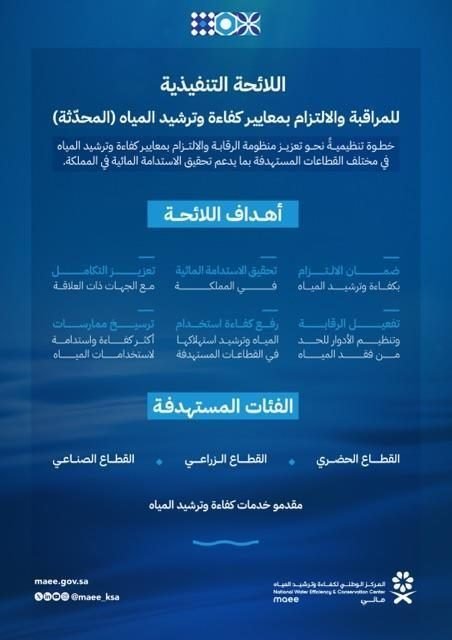
The chief executive of the National Center for Water Efficiency and Rationalization (Mai), Eng. Fahhad bin Huwaizi Al-Dosari, said the updated implementing regulation for monitoring and compliance with water efficiency and rationalization standards is a regulatory step towards stronger oversight and more efficient water use across sectors, according to the Saudi Press Agency (SPA).
Al-Dosari said the regulation, whose provisions take effect on 21 March 2027, sets out a clear framework for monitoring and compliance, defines roles and responsibilities, and establishes mechanisms for detection and referral, strengthening the centre’s supervisory role and its coordination with relevant bodies.
“Raising water-use efficiency does not stop at setting standards; it requires a clear system that ensures compliance and follows up on implementation,” he said, adding that the regulation achieves this by organising roles and procedures and activating oversight, helping to reduce water loss in all targeted sectors.
The regulation comprises 15 articles covering its scope, compliance standards, the roles and responsibilities of the centre and other bodies, violations, detection and referral mechanisms and final provisions. It covers the urban, agricultural and industrial sectors as well as water efficiency service providers, and applies to all natural and legal persons in the public, private and non-profit sectors.
Al-Dosari said the coming period will focus on preparing those covered by the regulation before it enters into force, in line with the Water Law and the targets of Saudi Vision 2030. The Minister of Environment, Water and Agriculture approved the updated regulation on 19/02/1448 AH.