 العربية
 English
 हिन्दी
 বাংলা
 اردو
 Français
 中文
 አማርኛ
 فارسی
 Türkçe
 Русский
 한국어
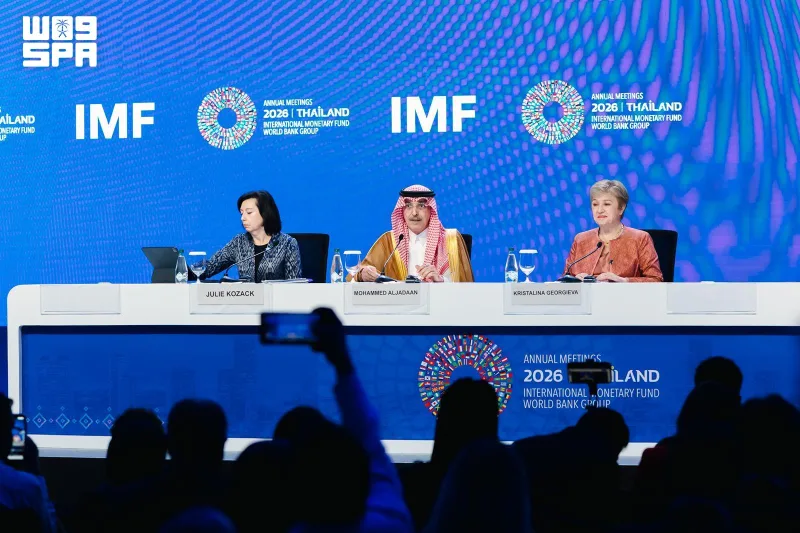
Saudi Central Bank (SAMA) Governor Ayman Al-Sayari delivered the Kingdom's statement to the International Monetary and Financial Committee (IMFC) at the 2026 Annual Meetings of the World Bank Group and the International Monetary Fund in Bangkok.
He welcomed the decision to extend the IMFC chair's term by a year to keep dialogue and consensus going among members. The Diriyah Guiding Principles, he said, give members common ground for reforming IMF governance, and the task now is to turn them into concrete progress that improves members' representation while keeping the Fund strong, well resourced and quota-based. He also welcomed the Managing Director's Global Policy Agenda, saying the Fund's immediate priority is to preserve stability at a time of high uncertainty.
Al-Sayari said the conflict in the Middle East continues to weigh on the global outlook. Its effects, first felt in energy markets and key shipping lanes, are now spreading through trade, transport, inflation, financing and confidence, while countries' ability to absorb more shocks remains uneven and limited.
On policy, he said central banks should protect price stability without overreacting to temporary supply-driven price rises, but act firmly if inflation pressures build. Fiscal policy should tackle debt and refinancing risks and rebuild buffers while protecting productive investment and support for the hardest-hit households. He also called for stronger financial supervision and for harnessing AI and digital finance while guarding against cyber risks.
Turning to the Kingdom, he said the Saudi economy remains resilient in the face of the ongoing conflict in the Middle East, backed by prudent policies and substantial buffers. Its financial soundness indicators are among the strongest in the region, and stress tests confirm banks can withstand severe shocks.
He concluded that Saudi Vision 2030 has strengthened the economy's foundations by expanding the non-oil sector and private-sector participation, and that the Kingdom remains committed to reforms while safeguarding fiscal sustainability.