العربية
 English
 हिन्दी
 বাংলা
বাংলা اردو
اردو Français
 中文
中文 አማርኛ
አማርኛ فارسی
فارسی Türkçe
 Русский
 한국어
한국어
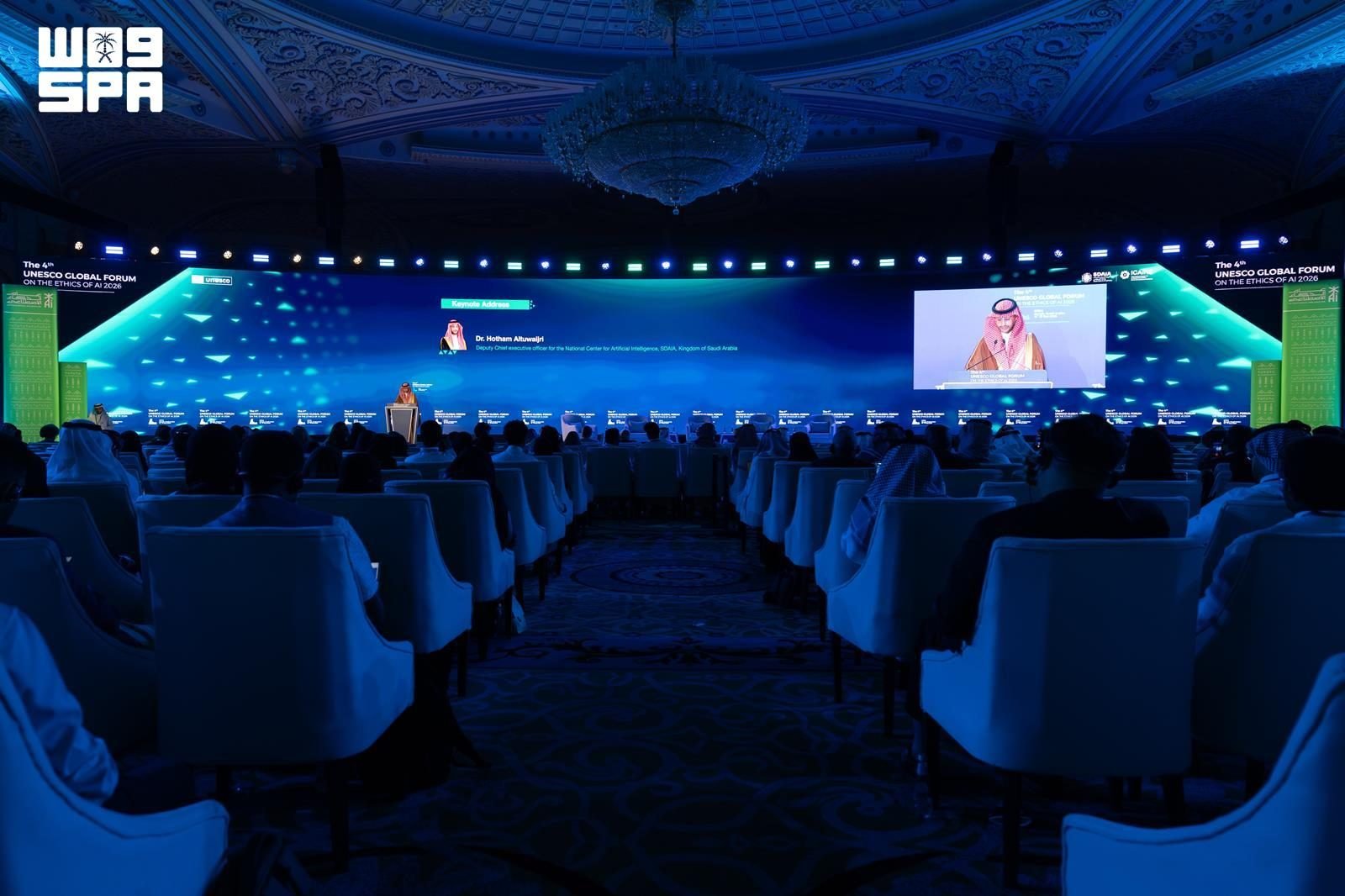
Riyadh wrapped up the second day of the fourth UNESCO Global Forum on the Ethics of Artificial Intelligence 2026 on Wednesday, with officials, experts, researchers and policymakers from many countries discussing national AI readiness, institutional capacity, public-sector use of AI, its effect on jobs and skills, safety and ethics, and international cooperation on oversight.
Sessions looked at building the institutional capacity public administrations need to adopt AI, Saudi Arabia's experience in widening the use of AI across government, how AI is changing jobs and skills, and how education and training systems can keep up with new skills demands.
In support of specialist talent, the Saudi Data and AI Authority (SDAIA) honored 52 experts and specialists who had earned professional badges, recognizing their skills and their scientific and professional contributions. The day also saw the third edition of the Elevate program launched, which aims to empower 25,000 women worldwide in AI ethics.
The International Center for AI Research and Ethics (ICAIRE) announced a two-year program to prepare 10,000 AI leaders, run with the Islamic World Educational, Scientific and Cultural Organization (ICESCO), in partnership with Apolitical and in coordination with the Saudi National Commission for Education, Culture and Science. It targets senior public-sector leaders and decision-makers in ICESCO member states.
SDAIA organizes the forum with UNESCO, in cooperation with ICAIRE and in coordination with the Saudi National Commission. Running in Riyadh from September 14 to 17, it is the first time the international platform has been held in the Arab world.