 العربية
 English
 हिन्दी
 বাংলা
বাংলা اردو
اردو Français
 中文
中文 አማርኛ
አማርኛ فارسی
فارسی Türkçe
 Русский
 한국어
한국어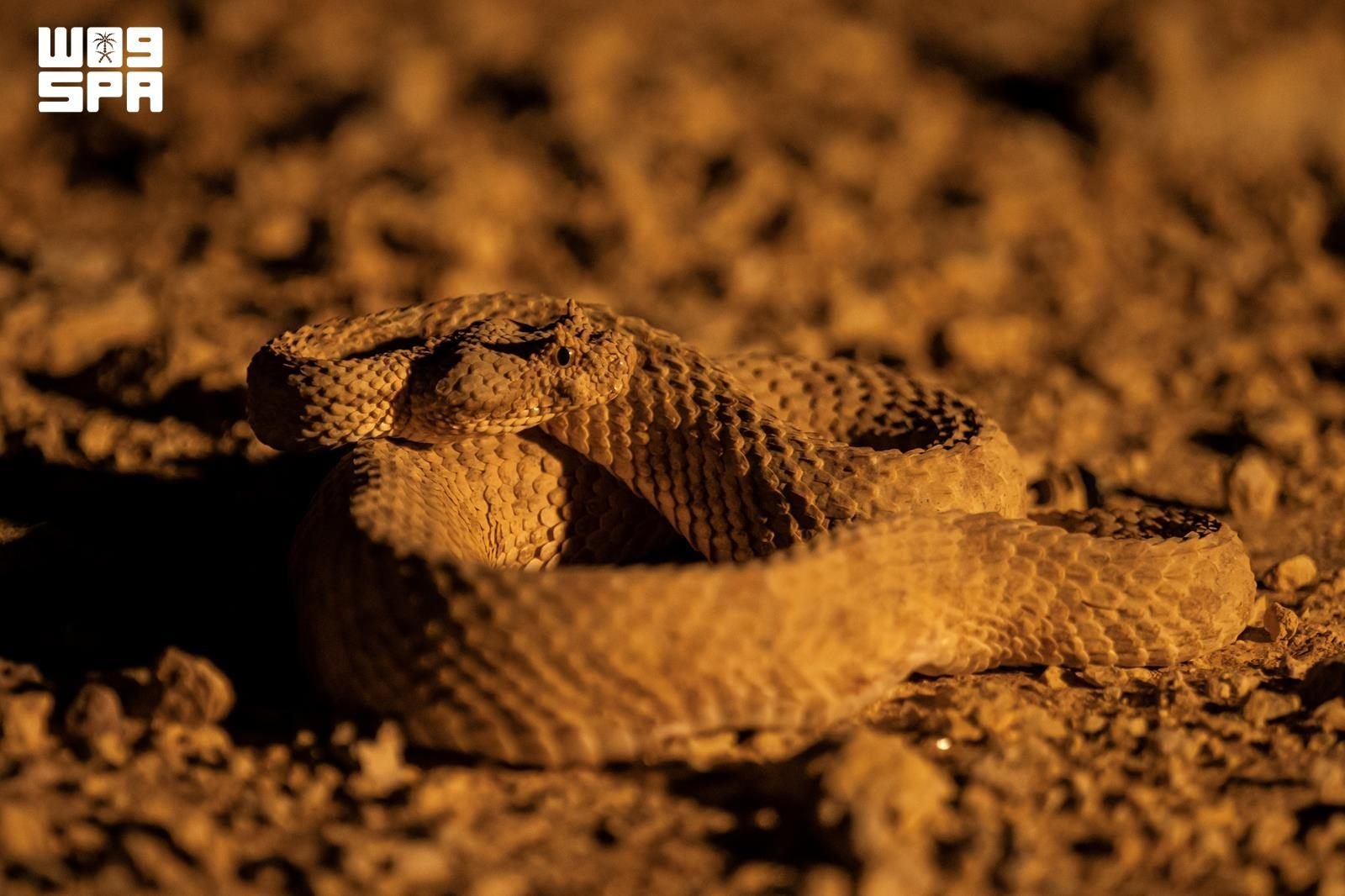
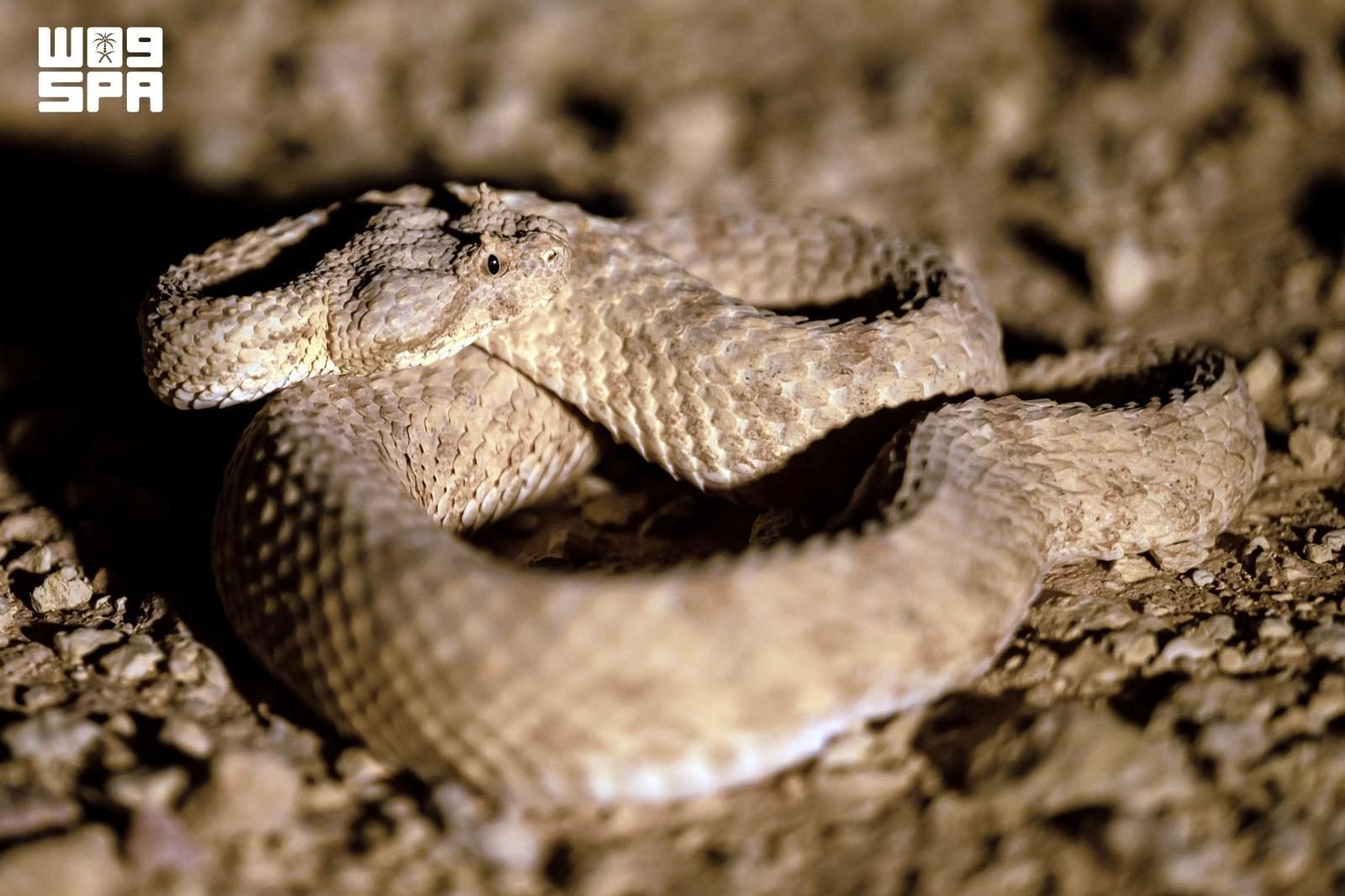
Field's horned viper (Pseudocerastes fieldi), also called the false horned viper, is a desert snake of the Middle East that has been recorded in northern Saudi Arabia.
It has a broad triangular head clearly set off from the neck and a short snout. Above each eye sits a horn-like cluster of small overlapping scales, one of its most recognizable features, and the tip of its tail is dark, almost black.
Its brown and gray colors match the surrounding soil and rocks, giving it effective camouflage. It lives in a range of dry habitats, including rocky, limestone and basalt deserts, wadis and steppes, and prefers firm, stony ground to open sand dunes.
Adnan Khalifa of the Aman Environmental Association, who observes and documents wildlife, said the viper feeds on rodents, lizards and birds and may hunt actively when prey is available. It is part of the biodiversity of desert ecosystems, he said, and helps keep the food web in balance.
Khalifa cautioned against approaching, cornering or trying to handle the snake. Anyone who encounters one should keep a safe distance, avoid provoking it and calmly leave the area, for the safety of both people and the animal.