 العربية
 English
 हिन्दी
 বাংলা
বাংলা اردو
اردو Français
 中文
中文 አማርኛ
አማርኛ فارسی
فارسی Türkçe
 Русский
 한국어
한국어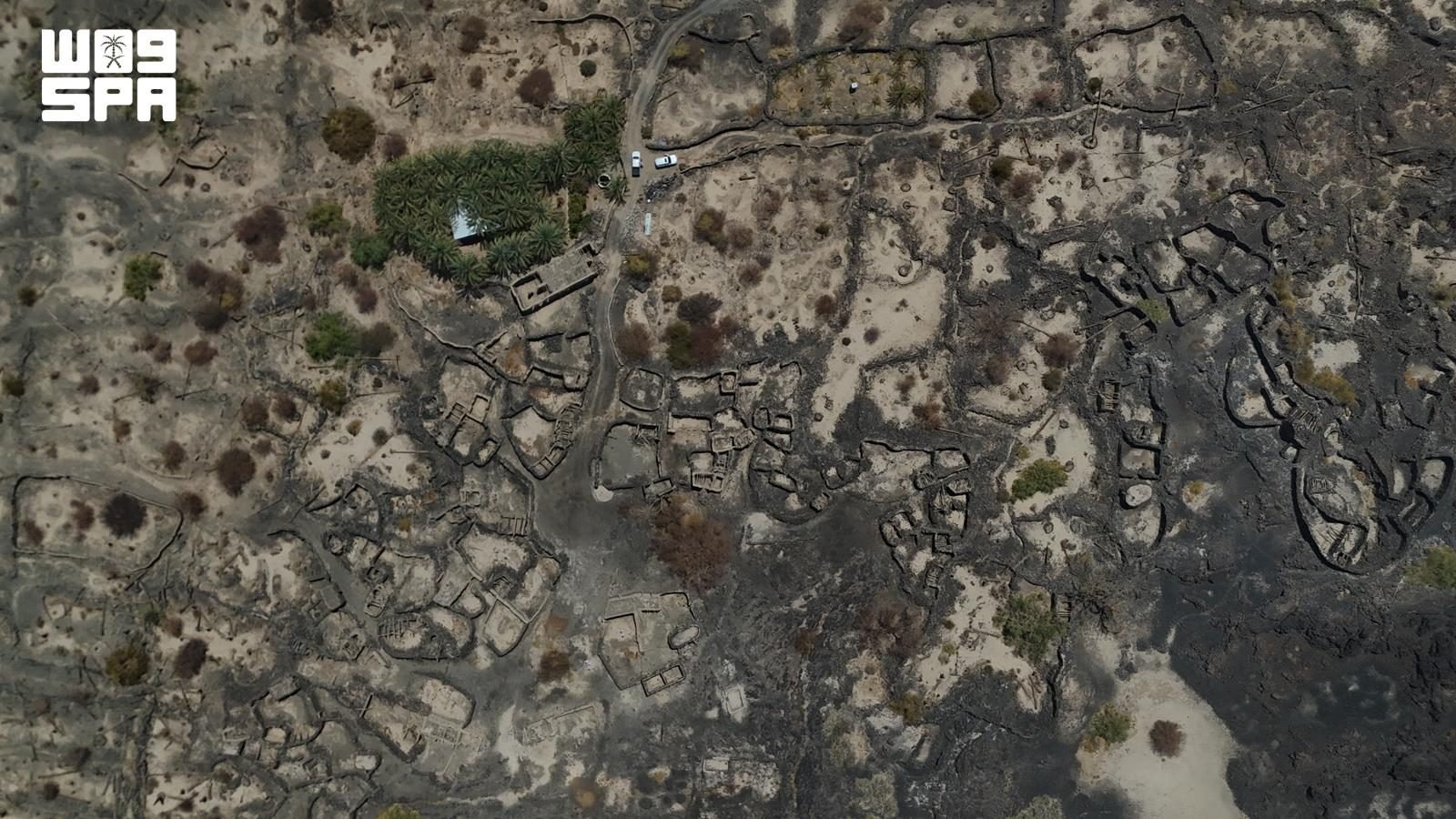
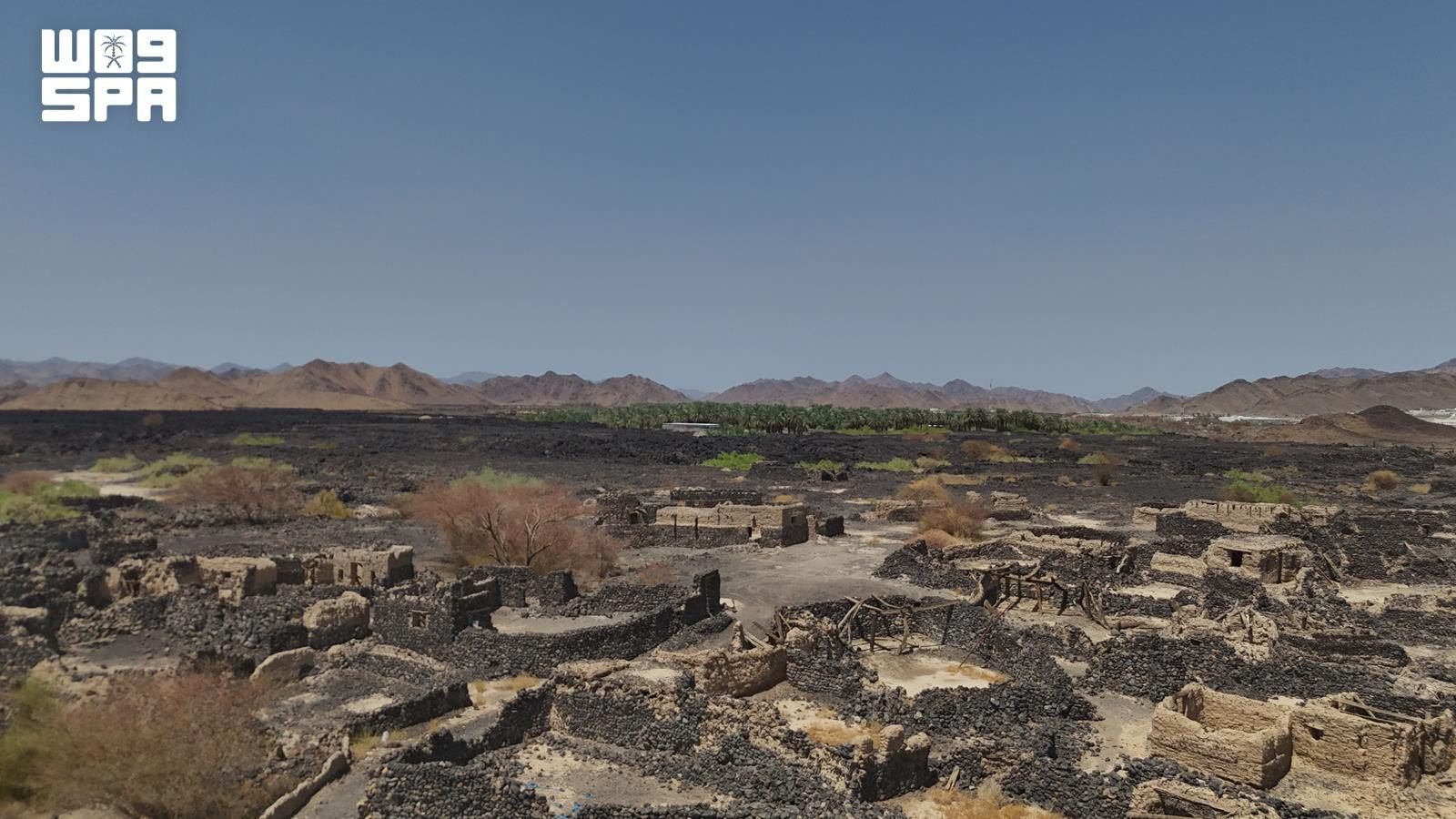
Stone houses, an old mosque and the remains of former farms in Al-Ain village, Al-Ais Governorate, Madinah Region, document agricultural and social life in one of the governorate's historic villages, set where mountains and volcanic fields meet farmland.
Yousef bin Rajeh Al-Shadhifi, a researcher on the history of Al-Ais, said the village was known for farming, especially date palms and Barni dates, as well as lemons, mangoes, oranges, pomegranates, grapes and figs.
Its small houses lie scattered among the mountains and beside volcanic harrats. Built of stone and mud and roofed with palm trunks, fronds and leaves, they reflect a building style based on local materials.
At the heart of the village stands an old mosque. According to Al-Shadhifi, it started as a small prayer place and was rebuilt around 1359 AH to host daily, Friday and Eid prayers, becoming a center of community life.
The village remained inhabited until the 1390s AH, he said, when its last residents left after the spring dried up and the people of Al-Ais extended their farming to other parts of the governorate.